


Stockholm absolutely stole my heart last month, and I’m still dreaming of cinnamon buns and Baltic breezes. As someone who’s wandered through 55+ countries, I can honestly say this Swedish gem offers something deliciously different – a perfect blend of cosy coffee culture, island-hopping adventures, and Viking heritage that had me completely mesmerised.
I was travelling with my sister who was visiting from New Zealand and this trip completely blew our expectations of a long-weekend out of the water.

Fika: The Art of Swedish Coffee Breaks
Let me introduce you to my new favourite word: fika. It’s not just a coffee break – it’s a Swedish institution, a sacred pause in the day where time slows down and connection takes centre stage. Throughout Stockholm, I found myself utterly charmed by this ritual that’s woven into the fabric of daily life. From tiny cafés tucked into Gamla Stan’s cobblestoned corners to modern coffee houses with minimalist Scandi vibes, fika was everywhere.
What struck me most wasn’t just the divine cardamom and cinnamon buns, but the philosophy behind it all. Fka is about pressing pause, truly savouring the moment, and prioritising human connection over hustle. I watched Stockholmers genuinely stop their day for these breaks, phones tucked away, conversations flowing as freely as the coffee. Museums and shops proudly advertise their fika spots, knowing it’s essential to any Swedish experience.
Island Hopping in the Stockholm Archipelago
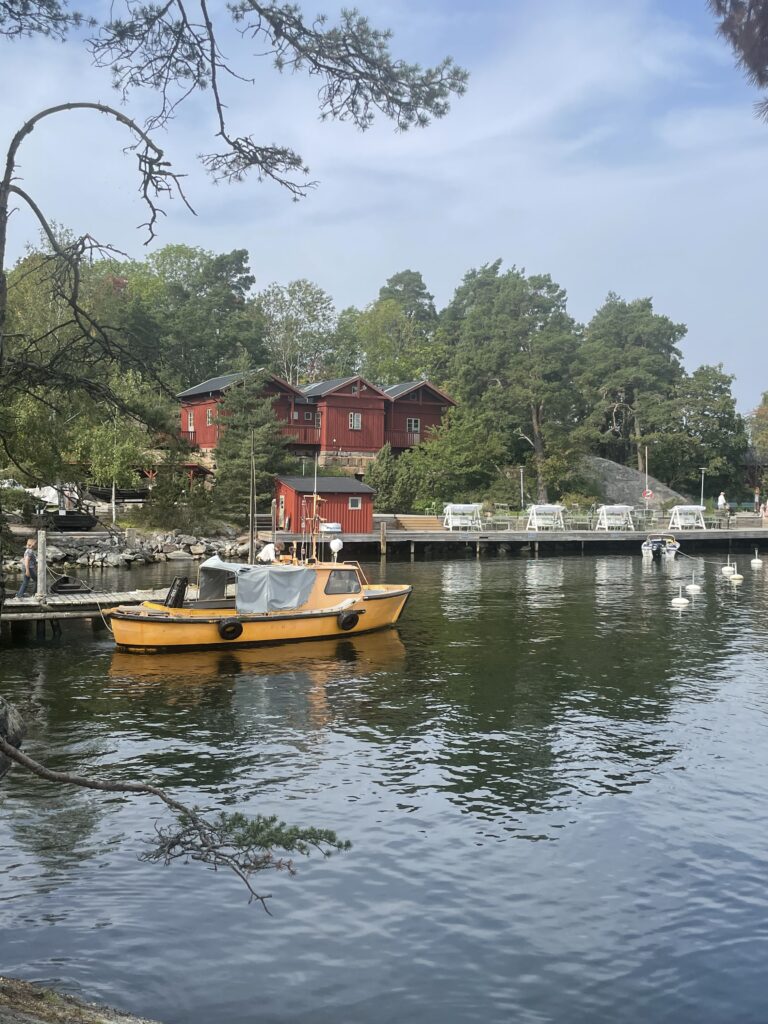
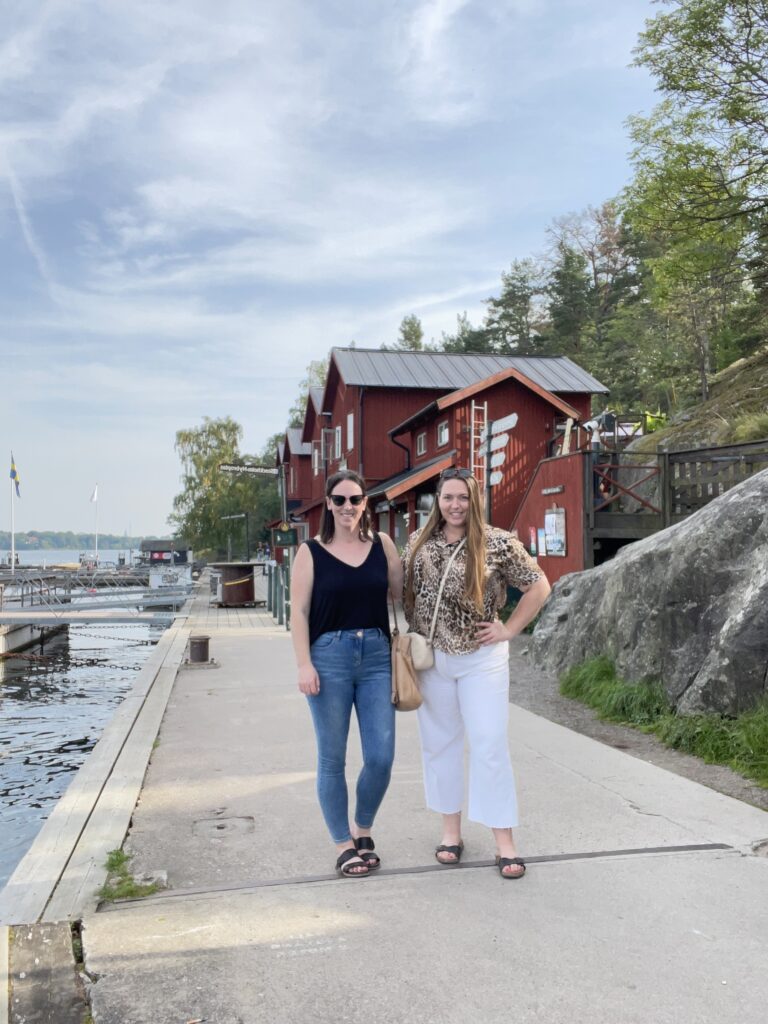
Just when I thought Stockholm couldn’t get more enchanting, we hopped on a ferry to Fjäderholmarna. In less than 30 minutes, we’d traded city streets for this peaceful island paradise – part of Stockholm’s incredible archipelago of 30,000 islands and skerries.
The Stockholm archipelago is the result of the effects of the last Ice Age, known as the Pleistocene, which lasted 2.6 million years and ended around 11,700 BC. During this ice age, huge masses of ice accumulated in the region, particularly in Sweden, causing the earth’s crust to sink and creating depressions in the ground.
When the temperature began to rise, causing the ice to melt,the pressure exerted on the earth’s crust decreased..As a result, some of the land rose, forming the future islands and islets of the archipelago, while the depressions left by the disappearing ice were filled with water. For a long time, the archipelago was inhabited by small farmers who fished for their own needs. They lived almost self-sufficiently, with few economic exchanges.
In the late 19th and early 20th centuries, Stockholm’s wealthy bourgeoisie began building beautiful summer homes on the archipelago.
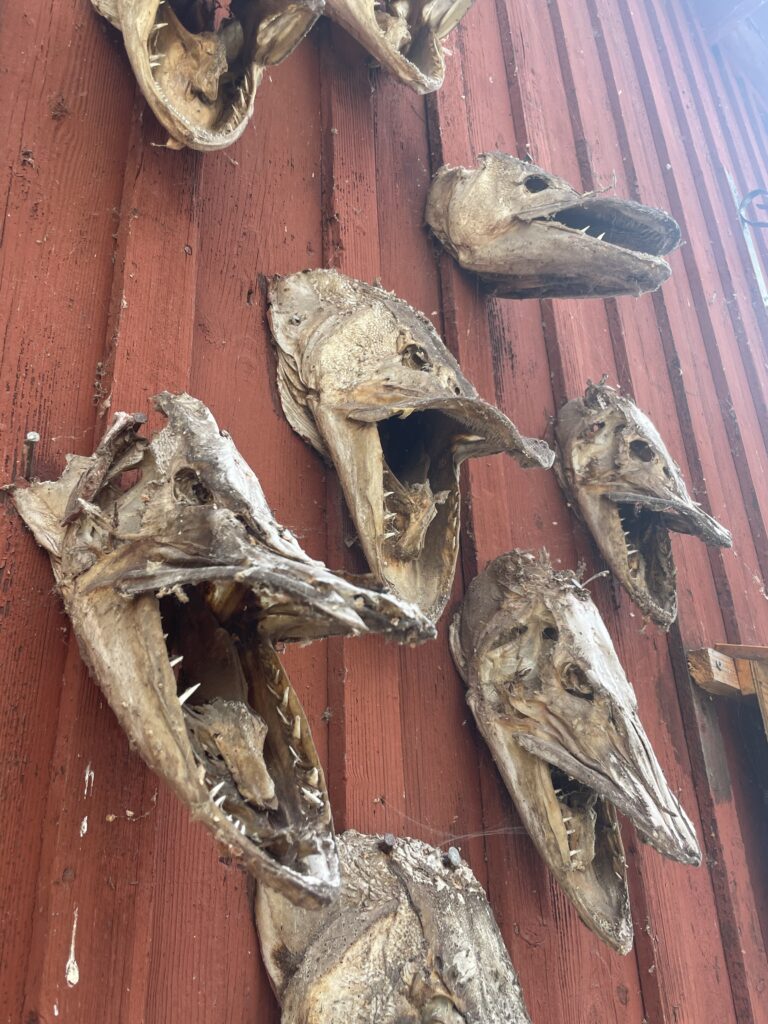
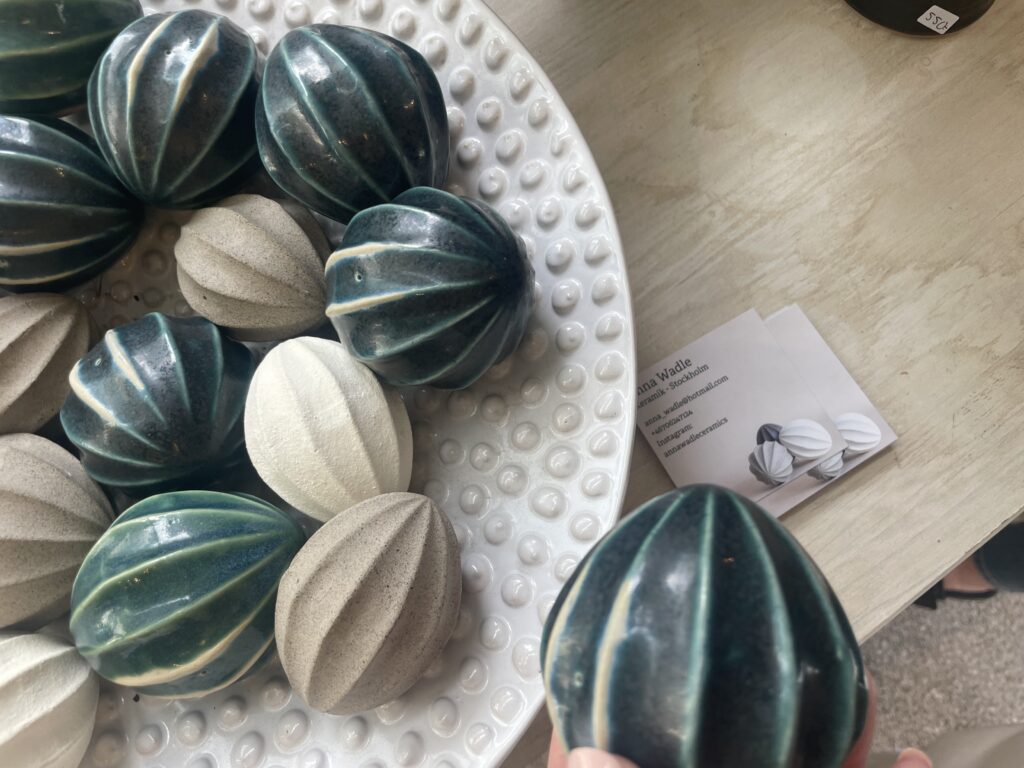
Fjäderholmarna itself is tiny – we walked the entire perimeter in under an hour – but packed with charm. Local artisans have set up the most delightful craft shops where we watched potters shape clay into works of art. The highlight though? Our lunch beside the dock, where I tucked into fresh-caught fish while boats bobbed in the harbour and seabirds wheeled overhead.
What captivated me most was how this slice of island life sits so close to the city. It’s like Stockholm keeps these little pockets of tranquillity just a ferry ride away, ready to restore your soul whenever urban life gets too hectic.

Following Viking Footsteps
Here’s where things get personal – and slightly obsessive. I’ve recently discovered I have ancestral links to Godfred Haraldsson The Black (born 935 in Sweden, died 1005), known as the King of Iceland. So visiting Stockholm’s Viking Museum wasn’t just tourism; it felt like a pilgrimage to understand our heritage.
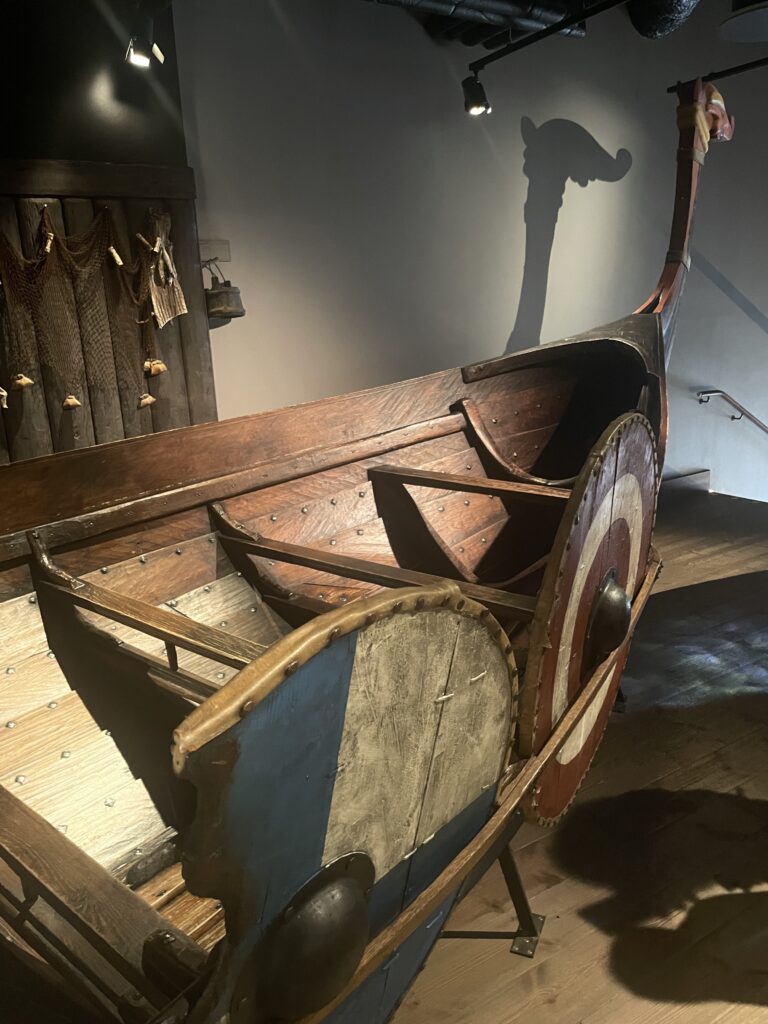
The museum brought Viking life into vivid focus with interactive exhibitions and remarkably preserved artefacts. The music playing really captured me as we slowly walked through the dark museum, I wondered if this is what was played around open fires as Vikings recounted tales of gods and heroes – it definitely felt accurate.
We had the opportunity to learn to write our names in Old Norse. A fun fact is that the days of the week in English, like Wednesday and Thursday, are named after Viking gods: Woden (Odin) and Thor, respectively.
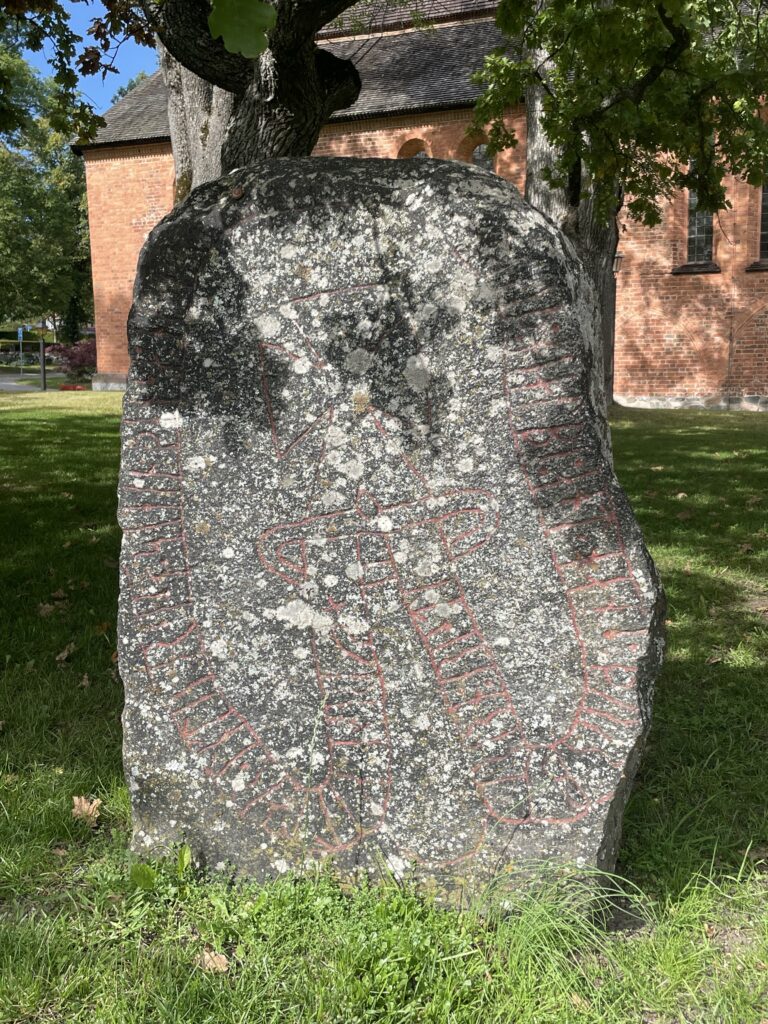
The real adventure came with our day trip to Sigtuna, Sweden’s oldest surviving town. Armed with a self-guided walking tour map, we spent hours exploring Viking runestones and ancient remains. Standing before these thousand-year-old carved stones, trying to decipher the runes, I felt goosebumps. These weren’t just historical artefacts – they were possibly messages from my ancestors, stories carved in stone by people who might have known our great-great-great (add about 30 more greats) grandfather.
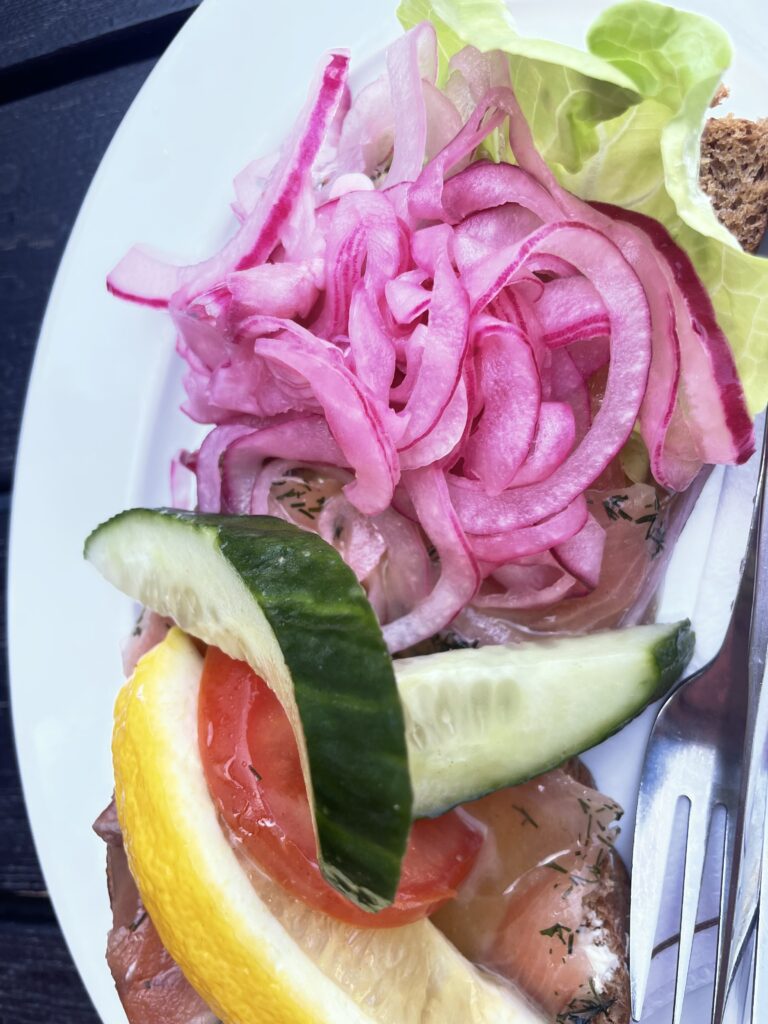
We found a cute lunch spot in a shady garden and ordered smörgås (open sandwiches) an absolute must eat while travelling in Norway! We quickly learnt that Swedes have elevated the humble sandwich into something rather special by simply… leaving off the top slice. Picture this: a slice of dense, dark rye bread, generously buttered, then topped with crisp lettuce, a mountain of perfectly smoked salmon, pickled red onion, and a dollop of creamy dill-spiked mayo.
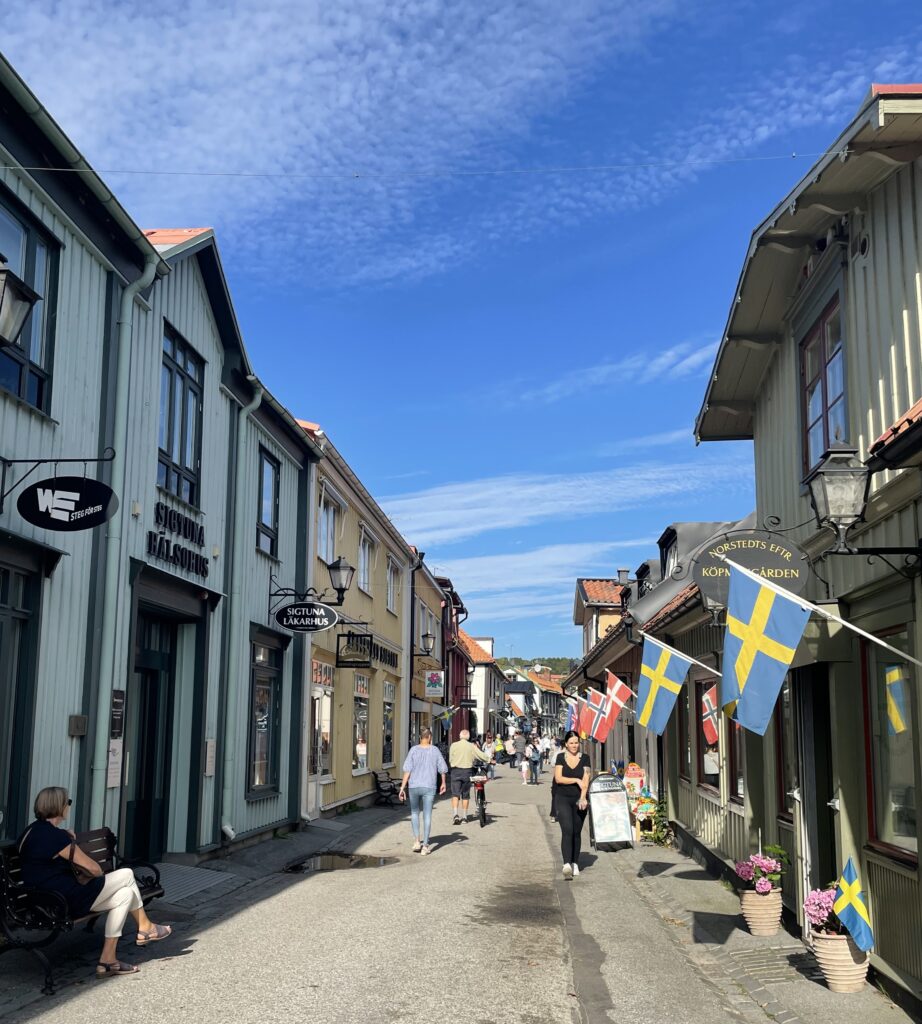
Sigtuna itself is very picturesque, with wooden houses in sherbet colours lining medieval streets. But it’s the Viking heritage, visible in runestones scattered throughout the town and surrounding countryside, that makes it extraordinary. Each stone tells a story – of voyages, battles, and lives lived a millennium ago.

Practical Bits
- Museums often close early on certain days – check ahead
- The Metro is highly efficient and one of the best ways to get around the city
- Many restaurants close between lunch and dinner service
- Stockholmers speak impeccable English but learning “tack” (thanks) goes a long way
Whether you’re drawn to cosy coffee culture, island adventures, or ancient history, Stockholm delivers it all with that effortless Swedish style. And yes, I’m already planning my return.
Have you experienced fika or explored Viking heritage sites? I’d love to hear about your Swedish adventures in the comments below!
