

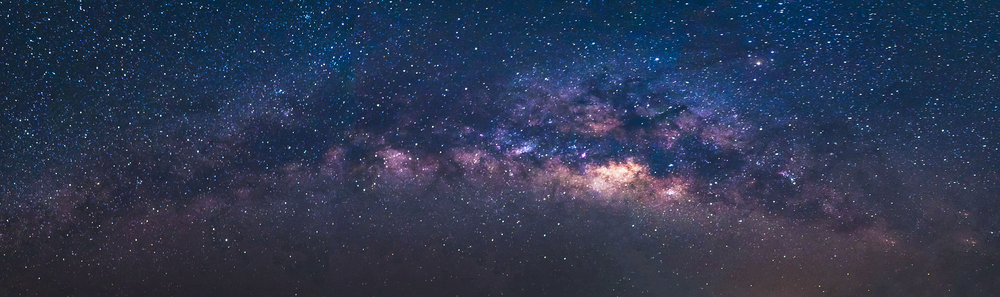
Sitting outside our hostel accommodation in the small town of Rurrenabaque, Bolivia is the one and only time I have seen the Milky Way.
A band of glittery stars, speckles and dust illuminated across the pitch black sky.
We had returned from drinks at a local bar. It had been a real struggle to find our way home as there were no street lights, in fact no light pollution at all. Back in 2006, it wasn’t common to travel with a mobile phone, so we carried a tiny pocket touch and stumbled down the gravel road to our accommodation. It was a 5-6min walk but seemed much longer because I couldn’t see anything in the dark. It was only around 9.30pm when we got back, and a few other travellers were sitting outside our accommodation.
We had seen this band of light up in the sky, which was like nothing I’d ever seen before on the walk back to our accommodation.
Another traveller at our hostel said, “that’s the Milky Way”. It was astonishing. And I felt silly, that I hadn’t realised what it was until this moment.
But, now that we were safely home, we could sit, stare and give this mind-blowing view our full attention.
Our Milky Way galaxy is about 100,000 light-years across and is a spiral galaxy in structure.
The Milky Way has fascinated us humans for millennia. Attempts to chart the galaxy date back to ancient Greece and up until the last 150 years, when light pollution interrupted our view, it would have been visible for all of humankind to see when they looked up to the sky.
In an article for EarthSky, writer Andy Briggs shared, Myths and legends grew up in different cultures around this mysterious apparition in the heavens.
MILKY WAY QUICK FACTS

– Galaxy type: Spiral
– Age: 13.6 billion years (and counting)
– Size: 100,000 light-years across
– Number of stars: about 200 billion
– Rotation time: 230 million years
Each culture explained this band of light in the sky according to its own beliefs.
To the ancient Armenians, it was straw strewn across the sky by the god Vahagn.
In eastern Asia, it was the Silvery River of Heaven. The Finns and Estonians saw it as the Pathway of the Birds.
Meanwhile, because western culture had become dominated by the legends and myths of first the ancient Greeks and then the Romans, it was their interpretations which were passed down to a majority of languages. Both the Greeks and the Romans saw the starry band as a river of milk. The Greek myth said it was milk from the breast of the goddess Hera, divine wife of Zeus. The Romans saw the river of light as milk from their goddess Ops.
Thus, it was bequeathed the name by which, today, we know that ghostly arc stretching across the sky: the Milky Way.
It was in the 1920s that astronomers realised that the Milky Way is only one of many galaxies populating the universe. Up until then, most believed the Milky Way and the universe were one.
Starting up at the magic above us made me think that the beauty of the Milky Way is not just in its cosmic glitter but also in the emotions it stirs. Under its radiant glow, I felt a sense of wonder, insignificance, and connection all at once. It’s as if we’re part of an ancient cosmic story, a witness to the ongoing saga of the universe.
The silence of the night, interrupted only by the whispers of the cosmos, adds to the profound experience.
Would love to know, have you seen The Milky Way? And if so, where in the world were you?
